Where your audience buys your tickets.
Free tickets: one in three people does not show up
We looked at 117,000 tickets from 307 organisers. 36% of free tickets went unused, against 14% of paid ones. What that tells you, and what to do about it.
 Henrico Pops •
Anyone who has organised a free evening knows how it goes. The sign-ups come in and you put out another row of chairs. And on the night a third of the room is empty.
We wanted to know whether that feeling is right, and how big the difference with paid tickets is. So we counted what happened at the door: which tickets were scanned and which were not.
Free36 of 100 seats stay empty
Paid14 of 100 seats stay empty
Averaged over 117,115 tickets from 307 organisers, at events where tickets were scanned at the door.
36.4% of free tickets were never used. For paid tickets it was 13.6%. Someone who asks for a free ticket stays home almost three times as often as someone who pays for one.
How we measured it
We took every event between April 2024 and October 2026 that was scanned with Tickable and had at least twenty tickets. Of those, we kept only the events where the door really scanned, which we defined as at least 40% of the tickets being scanned. That keeps out the evenings where the organiser put the scanner away after a quarter of an hour and waved everyone in. It left 857 events, from living-room concerts to festivals, run by 307 organisers in the Netherlands and Belgium.
We call a ticket that was not scanned a no-show. That is slightly strict: now and then someone walks in without a scan. But that is as true for free tickets as for paid ones, so the difference between the two stands. And to make sure one large organiser does not decide the picture, we also looked at each event separately. The picture holds: at half of all free events more than 32% of tickets went unused, at half of all paid events more than 10%.
The difference is at zero
A ticket does not need to be expensive to get used.
Unused tickets by ticket price
Share of tickets that were not scanned, by ticket price. 117,115 tickets from 307 organisers.
A ticket of a euro or two gets used about as reliably as a ticket of twenty euros, and more than twice as reliably as a free one. The big step is between nothing and something. Behavioural economists call it the zero-price effect: something that is free gets treated differently from something that costs a few cents, even when the difference in money hardly matters.
The bump at €3 to €5 is spread across 58 organisers, and we have no good explanation for it. What it does not change: in that group too, nearly 80% turn up, where for free tickets it is not even two thirds.
Book early, more likely to stay away
The further ahead someone asks for a ticket, the more likely the seat stays empty.
Unused tickets by when they were booked
| Free | Paid | |
|---|---|---|
| On the day | 33.9% | 12.2% |
| 1 to 7 days before | 35.2% | 12.4% |
| 1 to 4 weeks before | 32.7% | 13.9% |
| 1 to 3 months before | 41.8% | 14.7% |
| More than 3 months before | 45.3% | 16.5% |
Share of free and paid tickets that were not scanned, by how long before the start they were booked.
Of free tickets booked more than three months ahead, nearly half are not used. Diaries change in three months, and a free booking costs nothing to forget. But paid tickets climb too, from 12% for people who buy on the day to 16.5% for those who bought the quarter before.
At the same time, people buy late. Of all paid tickets in these figures, 9% were bought in the last six hours before the start, and 14% in the last day. With free tickets, 38% were booked on the day itself. Close sales a day early and you miss a good part of your audience.
The group booking that does not come
Unused tickets by size of the order
| Free | Paid | |
|---|---|---|
| 1 ticket | 33.4% | 15.6% |
| 2 tickets | 34.3% | 14% |
| 3 or 4 tickets | 33.9% | 11.6% |
| 5 or more tickets | 43.9% | 12.7% |
Share of free and paid tickets that were not scanned, by the number of tickets in the order.
With paid tickets, groups are the most reliable of all: someone who pays for five people has usually talked to those five people already. With free tickets it is the other way round. An order of five or more free tickets stays 44% empty. That fits one person booking for the whole group of friends, just in case.
When the room fills up
For the people who do come, we also looked at when. These are the scans at performances and concerts of up to three hours, where a start time really means something: 328 events from 134 organisers.
When visitors are scanned, relative to the start
| 60 to 50 minutes before the start | 0.6% |
|---|---|
| 50 to 40 minutes before the start | 2.5% |
| 40 to 30 minutes before the start | 6.1% |
| 30 to 20 minutes before the start | 15.5% |
| 20 to 10 minutes before the start | 25.7% |
| 10 to 0 minutes before the start | 28.5% |
| 0 to 10 minutes after the start | 12.1% |
| 10 to 20 minutes after the start | 4.8% |
| 20 to 30 minutes after the start | 1.8% |
| 30 to 40 minutes after the start | 0.7% |
| 40 to 50 minutes after the start | 0.5% |
| 50 to 60 minutes after the start | 0.5% |
Share of all scans per ten minutes, from an hour before to an hour after the start.
Seven in ten visitors come in during the last half hour before the start, more than a quarter in the last ten minutes. One in eight arrives in the first ten minutes after it has begun. Two people at the door an hour early spend the first half hour mostly waiting. The moment you need that second scanner is ten minutes before the start.
Two more things stood out. Sunday evening is the evening with the most empty seats: one in five paid tickets goes unused, against 9% at daytime performances from Monday to Thursday. And regulars are no more reliable than newcomers. Someone buying a ticket from the same organiser for the third time stays home just as often as someone coming for the first time.
What to do with it
- Ask for a small amountA euro or two more than halves the chance of an empty seat. If you want nobody kept away by money, offer a free ticket next to a ticket with a voluntary contribution.
- Cap free ordersSet a maximum of four per order on free tickets. Large groups can still come, they just order per person or per family.
- Book more than the room holdsAt an expected 36% no-show, a room of 100 seats needs about 150 bookings. Start more carefully, with a third extra, and see how your audience behaves after the first edition.
- Remind peopleThe further ahead someone books, the more likely they forget. A reminder a few days before puts the evening back in their diary.
- Keep sales openOne in seven paid tickets is bought in the last day. Only close sales when the doors open.
- Staff the door on time, not too earlySeventy percent arrive in the last half hour. Plan your second scanner for the last ten minutes.
With Tickable you set a maximum per order for each ticket type, and with time slots the reminder email follows the visitor's own slot. The figures themselves hold whatever system you use.
How does this compare abroad?
International research points the same way, only less strongly. The event platform PheedLoop analysed over a thousand events, mostly conferences and business meetings, and found a no-show rate of 28% for free events and 17% for paid ones. At the events in our figures, which lean more towards culture and community life, the gap is wider: 36% against 14%. Why, these figures cannot tell us. One obvious explanation is that a conference falls in working hours and a choir concert in a free evening, where more can get in the way.
More on setting up a free event in selling tickets online for free.
Sources and method. Our own analysis of anonymised, aggregated ticket data from Tickable, events from April 2024 up to and including October 2026, only events with at least twenty tickets of which at least 40% were scanned. Cancelled tickets are not counted. A free ticket is a ticket priced at €0, also when it belongs to an event with paid tickets. PheedLoop, Event Data Lab Report #05. Shampanier, Mazar and Ariely, "Zero as a Special Price: The True Value of Free Products", Marketing Science (2007).

Experience the benefits of a ticketing platform
Join 570+ event organisers using Tickable for their ticket sales and visitor management.
Get startedMore from Tickable
How do I sell tickets online for my event?
Step-by-step guide to setting up your event with Tickable, creating ticket types, promoting, and launching online sales quickly.
Read more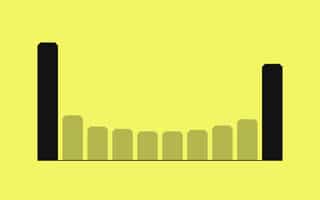
When do people buy tickets? The bathtub of ticket sales
We laid the ticket sales of 716 events side by side. A quarter go at the start, a fifth at the end, and in between lies a long quiet stretch.
Read more
Certificate of Excellence
Tickable receives the Certificate of Excellence. Discover how organizers rate us and the principles of simplicity, transparency, and affordability behind it.
Read moreOrganisers already selling with Tickable
- tickets issued
- 230,000+
- in tickets sold
- €3.6M
- events with paid tickets
- 1,700+
 Theater FloralisTheatre, Lisse
 Cultuurhuis De KeizerCultural centre, Lichtervelde
 LUVClub, Breda
 Flightdeck FestivalFestival, Haarlem
 GreijdanusSchool, Zwolle
 MeezingMatthäusSing-along concert, Utrecht
 Rugbyclub Hoek van HollandSports club, Hoek van Holland
 HaagsPianoHuisSalon concerts, Den Haag
 DiscocoParty nights, Rotterdam
 Lef musicalschoolMusical school, Zwolle
 Nationaal VlechtmuseumMuseum, Noordwolde
 DracoonTrade fair, Zaltbommel
 Theater SprookTheatre, Deventer
 Heij! FestivalFestival, Linne
 De WerkmanszonenBrass band, Riemst
 DES Nieuw-DijkMarquee festival, Didam
 C.V. de KuussegattersCarnival society, Veghel
 Dance YardDance school, Almere
 Culture Club OostConcert stage, Bathmen
 Popkoor NoizPop choir
 D'n TrefferVillage association, Kerkwijk
 2NITE EventsParty nights, Enter
 Bruiss FestivalFestival, Sneek
 NTR ZaterdagMatineeConcert series
 Rechts van het MiddenImprov theatre
 Harmonie Ons VerlangenWind band, Bilzen
 Oranje Commissie MunnekezijlKing's Day festival, Munnekezijl
 ZPSSwimming and water polo club, Stolwijk
 Theaterkoor MarcelloTheatre choir, Montfoort
 DansrijckDance school
 RS DanceshowDance show, Enkhuizen
 de KunstweideArt studio, Haarlem
 Openluchttheater VeldenOpen-air theatre, Velden
 s.v. OBWSports club, Zevenaar
 BreebizaFestival, Maasbree
 Schutterij St. RochusShooting guild, Stevensweert