Where your audience buys your tickets.
Selling tickets online: 10 tips to boost sales
10 tips to sell more tickets online, in the order of your sale and backed by the figures of 716 events on Tickable.
 Henrico Pops •
These tips follow the order of your sale, from preparation to the night itself. Where we can back something up, the figure comes from our own data: the ticket sales of 716 events and 117,115 scanned tickets on Tickable.
1. Set your price, and think twice about free
First look at what comparable events in your area charge. The prices we see most often are €10 and €15. More than half are a round amount and only 5% end in .95 or .99, so a round price looks perfectly normal at an event.
If you are considering free entry, expect empty seats. Of free tickets, 36.4% went unused, against 15.3% of tickets up to €3. A small price gives you a much more reliable picture of who is coming.
2. Offer more than one kind of ticket
Not everyone wants the same thing. A half day, an evening with dinner or a place at the front wins over people who would pass on the standard ticket. The Port Wine Festival Zwolle sold 600+ tickets across two time slots, with separate tickets for masterclasses.
3. Write your page for someone who is hesitating
Anyone landing on your ticket page wants to know what they get for their money. Give the date, start time, location, programme and what the price includes, with a photo that shows what it really looks like. If you keep getting the same question by email, the answer belongs on the page.
4. Buy a ticket yourself on your phone
Do this before you share the link. You will see right away where it sticks: an unclear ticket name, a question nobody wants to answer, a photo that does not fit a small screen. If you place the ticket shop on your own website, test it there too.
5. Make the start a moment
On average 24% of tickets go in the first tenth of the sales period, mostly to people who were already waiting for you. So announce the day and hour of the start in advance, and email your regulars that day.
If the start disappoints, do not panic. That average is pulled up by events that half sell out within a day. At the typical event, 5% go on the first day.
6. Do not expect too much from an early bird
An early bird is often seen as the way to sell early, but that is not what we find. We compared 84 events with waves to 632 without. With waves, less went at the start: 17% in the first tenth, against 25% without. In the last tenth it was 28% against 19%.
Events with waves did sell out more often, half against 40%, though that rests on a small group of 37 events. We cannot separate cause and effect here: many of these events are parties and festivals, and that crowd buys late regardless. So use an early bird mainly as a reward and to give the sense that something is running out, and do not count on it making everyone buy sooner.
7. Give the quiet middle a reason
Between the start and the final weeks, each tenth of the sales period brings in about 6%. That is normal, but it is also when something new can make the most difference: a programme item you reveal, an artist you announce.
This is also the moment for others to help. Give sponsors, partners or your most loyal visitors their own discount code to share, or set up a hidden ticket for members.
8. Measure which action works
When you share your link, choose where it is going, such as Instagram, your newsletter or a poster. The overview of your event then shows orders and revenue per source. For a discount code you see how often it was used. If you advertise on Instagram, Facebook, TikTok or Reddit, connect your account, so you can see which ads lead to a purchase. Then stop doing what brings nothing in.
9. Save your last push for the last week, after dinner
At the typical event, 17% of tickets go in the last week. That is the moment for a reminder, not two months earlier. Pick the evening for it: 29% of orders fall between six and ten, and the busiest hour of the week is Thursday between six and seven.
10. Keep sales open until the doors open
In the Netherlands, 14.1% of tickets are bought in the last 24 hours. If you close sales a day ahead, you miss about one in seven buyers. Some wait even longer: 5% of all paid tickets are bought after the event has started. In Belgium people buy earlier, with 7.3% in the last 24 hours, so there it pays to open sales earlier as well.
All figures come from our own analysis of anonymised, aggregated Tickable sales data. How we measured is explained in when do people buy tickets and no-shows for free tickets.
Experience the benefits of a ticketing platform
Join 640+ event organisers using Tickable for their ticket sales and visitor management.
Try it freeMore from Tickable

Do you need a Chamber of Commerce number to sell tickets?
You do not need a KVK number for Tickable. Whether you must register depends on three separate tests: the Business Register, income tax and VAT.
Read more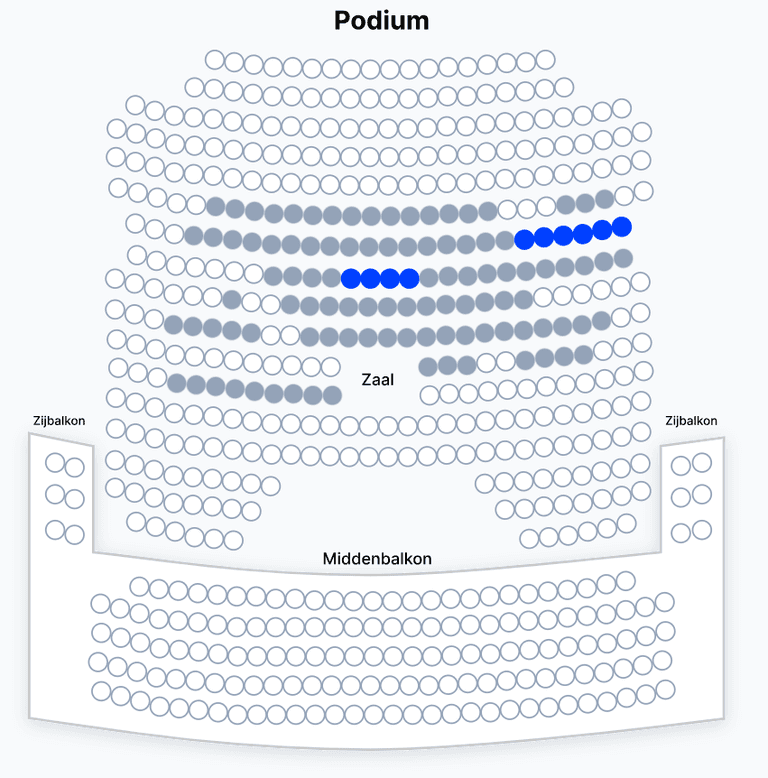
Sell reserved tickets for every experience
Let visitors pick their own seats with reserved tickets: benefits for seat filling, oversight, experience, and Tickable’s smart tools.
Read more
Certificate of Excellence
Tickable receives the Certificate of Excellence. Discover how organizers rate us and the principles of simplicity, transparency, and affordability behind it.
Read moreOrganisers already selling with Tickable
- organisers in the Netherlands and Belgium
- 640+
- tickets issued
- 260,000+
- in tickets sold
- €3.9M
- events with paid tickets
- 1,900+
 Theater FloralisTheatre, Lisse
 Cultuurhuis De KeizerCultural centre, Lichtervelde
 LUVClub, Breda
 Flightdeck FestivalFestival, Haarlem
 GreijdanusSchool, Zwolle
 MeezingMatthäusSing-along concert, Utrecht
 Rugbyclub Hoek van HollandSports club, Hoek van Holland
 HaagsPianoHuisSalon concerts, Den Haag
 DiscocoParty nights, Rotterdam
 Lef musicalschoolMusical school, Zwolle
 Nationaal VlechtmuseumMuseum, Noordwolde
 DracoonTrade fair, Zaltbommel
 Theater SprookTheatre, Deventer
 Heij! FestivalFestival, Linne
 De WerkmanszonenBrass band, Riemst
 DES Nieuw-DijkMarquee festival, Didam
 C.V. de KuussegattersCarnival society, Veghel
 Dance YardDance school, Almere
 Culture Club OostConcert stage, Bathmen
 Popkoor NoizPop choir
 D'n TrefferVillage association, Kerkwijk
 2NITE EventsParty nights, Enter
 Bruiss FestivalFestival, Sneek
 NTR ZaterdagMatineeConcert series
 Rechts van het MiddenImprov theatre
 Harmonie Ons VerlangenWind band, Bilzen
 Oranje Commissie MunnekezijlKing's Day festival, Munnekezijl
 ZPSSwimming and water polo club, Stolwijk
 Theaterkoor MarcelloTheatre choir, Montfoort
 DansrijckDance school
 RS DanceshowDance show, Enkhuizen
 de KunstweideArt studio, Haarlem
 Openluchttheater VeldenOpen-air theatre, Velden
 s.v. OBWSports club, Zevenaar
 BreebizaFestival, Maasbree
 Schutterij St. RochusShooting guild, Stevensweert